
6th Grade Outdoor School
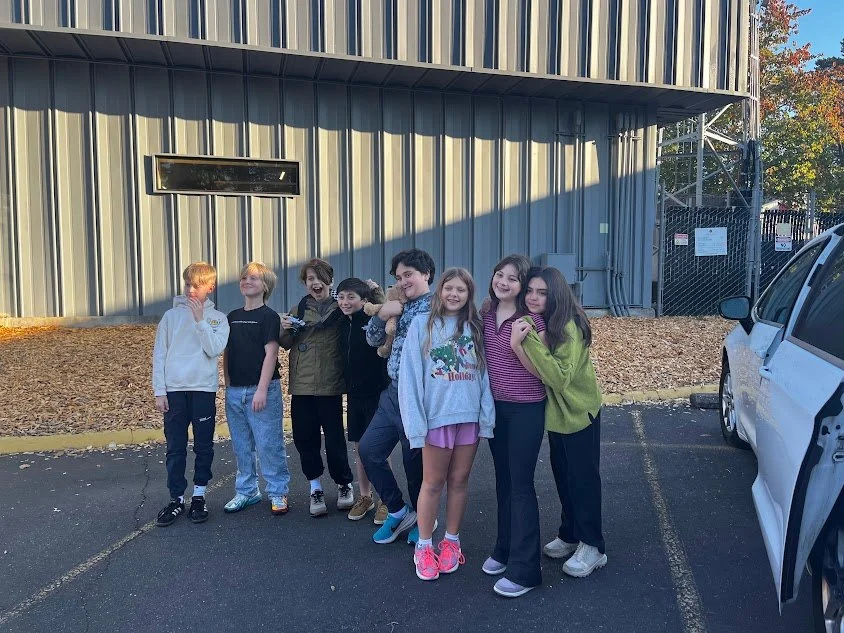
This year, our sixth graders spent three starry nights and four sunny days at Camp Meriwether on the spectacular Oregon Coast. The trip had two purposes: to study the Pacific Northwest coast environment alongside students from other schools, and to stretch their comfort zones by spending time away from family and home. They did an amazing job at both, especially in taking care of each other. They were open to the camp staff, from seasoned program gurus to freshly trained high school students, and open to working with students from three other Portland-area schools.
The weather was remarkable. At a time of year when it can be cold, wet, and windy, we were greeted each morning by fog at the flag raising, and by lunchtime the wind had died down and the sun had come out. After breakfast in the giant lodge, students headed off for Field Study Time, which is why Outdoor School is called Outdoor School. Kids were placed in mixed groups from the different schools, and smaller teams of four to six were led by high school instructors who ran skill-building activities and discussions on coastal and forest topics.
Topics ranged from newts, salamanders, and frogs to mushrooms, hydrology, plants, and geology. By the last day, students had to form a research hypothesis, collect field data, and present it to their group. One group wondered whether newts or frogs were more prevalent in the camp lake. Another looked at what creatures live under logs and rocks. Along the way, students hiked into towering coastal conifers to search for fungi and tried to divert a creek through the sand on the beach, which taught lessons in hydrology and the water cycle. One session sent students in mud boots to the edges of the lake, and by the end there was an abundance of newts and a pile of incredibly muddy boots to hose off. Another had students put on goggles and, one at a time, split open chunks of basalt with a heavy hammer. It was a great way for sixth graders to let off steam, and one student even found an unusual amount of iron fragments inside their rock.
Each afternoon, students chose a recreational activity, such as beach time, soccer, “chill” time, or even more rock splitting and newt catching. Everyone was exhausted by day’s end, but after dinner our class came together for games, camp exploration, and appreciations, always reflecting on the day. Some of our best class photos were taken during this time, because it was always at sunset, and we saw some spectacular sunsets!
If you asked our sixth graders their favorite part of Outdoor School, every one of them would say Campfire. Just when you thought there wasn’t an ounce of energy left, students gathered at an outdoor amphitheater by the lake, where a stage was bookended by two bonfires. Program staff led traditional songs, and each cabin gave a usually comical cabin call to confirm their attendance. The evening moved from high-energy songs and skits to quieter songs, where appreciations shifted from claps to snaps or simply hands held up to reflect the warm fire. Then cabin groups were excused one at a time, sung back to their bunks by staff standing in a semicircle on stage, connected hand over hand, with wishes for sweet dreams and a brand new day.
Everyone got their “steps” in, hiking from cabin to lodge to ecology classroom to beach, up and down hills, and back from campfire each night. That meant a good chance at sound sleep in Camp Meriwether’s comfortable cabins, though whether students took it depended on how well they listened to their high school cabin leaders, who were amazing at getting everyone settled.
Many schools never get the chance to attend Outdoor School. We were lucky to share the week with Sauvie Island Charter School, Sherwood Charter School, and both Whitford and Whitford Suma Middle School, who made it extra special. Combined with the weather, the talented staff, and the breathtaking scenery, I’m sure our students will remember this experience and recognize how important it is to visit and cherish places like this.
