2026 Science Showcase/LENS Expo
Dear GIS Families,
We are excited to launch another science showcase on March 18th, with participation from all grades. This will offer students an opportunity to explore science concepts through hands-on experimentation. Individual participation for grades 1-5 is optional, while it is built into the curriculum for grades 6 through 8. Early Learning teachers and grade school teachers have the option of contributing a class project, which allows our young scientists to participate as well.
Different grade levels should have varying levels of parental involvement and expectations. Because it can be a challenge to find the right balance in supporting your child’s project, here are some suggestions for what often works best for different age groups:
6th through 8th grade students should be doing completely independent work, but under the guidance of a science teacher or parent.
4th and 5th grade students should be doing most of their project work themselves.
2nd and 3rd grade students should be able to develop their question and prediction, but might need support when it comes to experiments. It’s ok to follow their lead and interest.
1st grade students might need help finding a project idea and support along the way.
In our experience, projects are successful if they are driven by the student’s interests and curiosity. New ideas might stem from the current IB unit in the classroom or one recently explored. You can support your student in their thinking by asking questions along the way. Remember that ultimately we want the students to identify with the project and their findings, and for this to be a student-driven project and product!
Participating in a science fair project has many benefits:
It reinforces science concepts, literacy and math skills
It fosters curiosity, awareness and creativity
It teaches students about research techniques and how to work independently
It shows how much fun science can be!
SIGN-UP: Students in grades 1-5 should sign up no later than 2/9.
Important Information for Grades 1-5
Finished projects will need to be dropped off no later than Monday, March 16th.
Presentations for grades 1-5 may be in German, Mandarin or English (or a combination of target-language and English).
Students should utilize a display and supporting materials no larger than a 36” X 48” presentation board. If a presentation board is not utilized, a similar amount of display space on a table will be provided for project materials.
Students may decide to collaborate with a partner or their family for the project. Just mark this choice on the sign up form.
Students will be scheduled to present their project to an adult expert and a group of middle school students on Wednesday, March 18th, during the school day.
Projects can fall into one of the following categories (you will choose one in the sign up form). Please note that projects involving bacteria, fungi, or any other live organisms need to be approved by the school.
CATEGORIES:
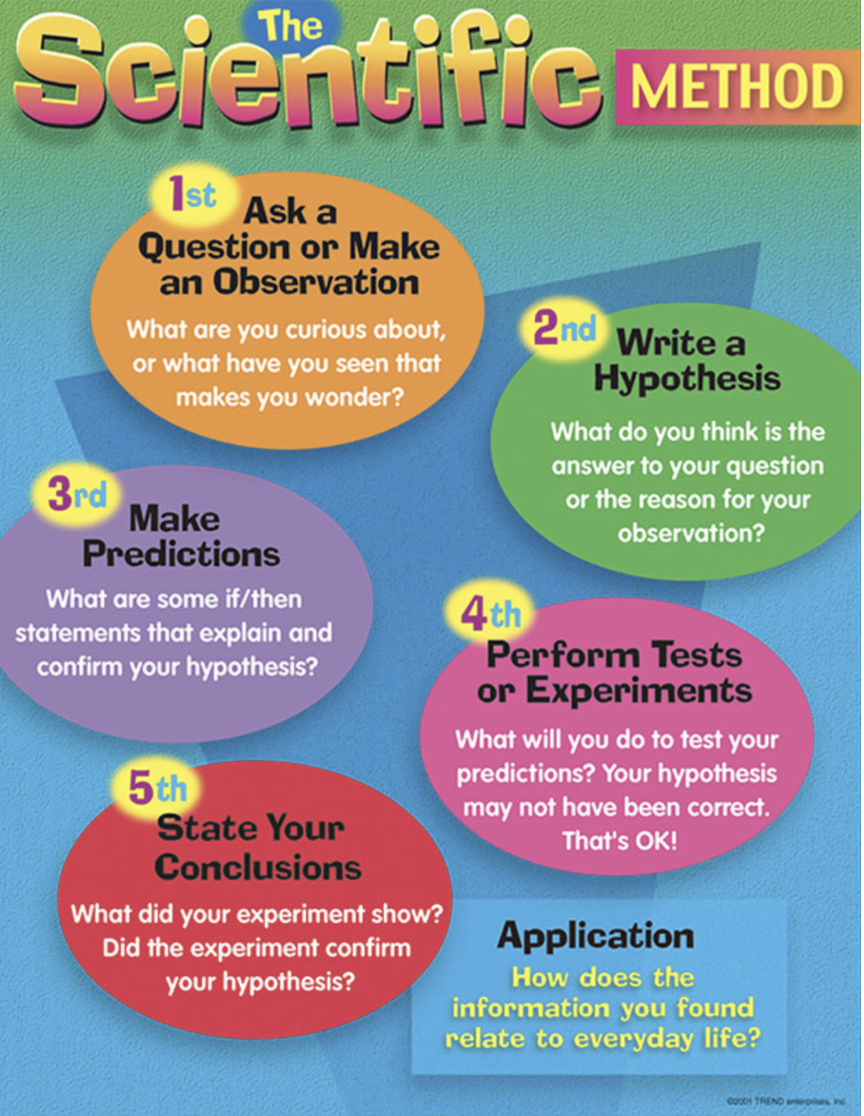
EXPERIMENT: You will conduct an experiment to find the answer to your question/problem. Using The Scientific Method will take you through the correct process of asking a question, doing some preliminary research, making a hypothesis (your best guess at how it will turn out), planning and conducting your experiment, and analyzing your results. Examples: Which paper towel brand is the most absorbent? What is the effect of sunlight on the growth of a plant?
INVENTION/ENGINEERING: Everyone is an engineer! You will use science, math, and creativity to dream up and design an object or a process to solve a real life problem. Follow the following steps to guide you through your design: asking a question, brainstorming, planning, creating, testing, and making it even better. Examples: Inventing a tool to dispense water to your cat; Inventing a tool to collect leaves from the ground.
RESEARCH (DATA MINING) PROJECT: Someone has already found the answer to your question/problem, and you will look for their answer/solution by reading books, talking to experts, and gathering information from other sources such as schools and public libraries. Your display board will have drawings, photographs, charts, graphs, dioramas, etc. Examples: How does a solar cell work? How does a light bulb operate? How do clouds form?
COLLECTION: You will collect and organize something of interest, answering questions related to observations made while exploring your world. Examples: What kinds of insects can be found in my backyard? What types of tree leaves can be found on my street?